

Two lift maintenance contracts can both be called comprehensive and cover entirely different things.
The word is not defined by any standard. It is a sales label, varying from contractor to contractor. What binds anyone is the schedule of inclusions and exclusions behind it — rarely read at signing, and the source of every invoice the owner did not expect.
A lift maintenance contract covers three things: the routine work the contractor will perform, the standard of service they must meet, and the repairs they will carry at their own cost. Most agreements describe the first in detail, quantify the second only loosely, and are least explicit about the third. Scope runs from basic preventive maintenance — servicing included, repairs billed as extras — to comprehensive cover, where component repair and replacement are priced into the fee. Which end you are at determines who carries the cost of the next failure.
What is actually in a lift maintenance contract?
The scope of work. The planned activity: attendance at a stated frequency, lubrication, adjustment, cleaning, inspection and routine testing. Contractors describe this part most fully, because it is the part they intend to do.
The service standard. What performance the contractor is held to. Every agreement has one somewhere, under whatever name its author gave it; we call it the Minimum Service Delivery Threshold — the floor below which service is a breach rather than a disappointment. What matters is not the label but whether the floor is written down and measurable.
The commercial terms. Term, renewal, price escalation, exclusions, liability, termination. The shortest section to read and the most expensive to get wrong.
Scope is a commercial matter, not a technical one. AS 1735 is the Australian standard series for lifts, escalators and moving walks; it does not tell you whether you or your contractor pays for a new controller. That allocation is negotiated once.
What does the Minimum Service Delivery Threshold set?
The MSDT is the contract's answer to "how good is good enough". Without one, service quality is whatever the contractor's own report says it was.
A useful threshold is specific on four fronts: how often the lifts are attended; how quickly the contractor responds to a callout, and separately to an entrapment; what availability the units must achieve; and what work sits inside the fee. Vague on any of these and it cannot be enforced.
Availability is the one owners under-specify most often. A number written without a measurement method is not a target but a sentiment. What counts as good lift availability, and how it translates into real downtime, is worth settling before the threshold is drafted.
A threshold also needs a consequence: if nothing follows from missing it — no service credit, no abatement, no escalation path — the number is aspirational.
Comprehensive vs basic: what is the real difference?
Terminology varies, and contractors use their own. Broadly, the market runs between two shapes:
| Basic / preventive | Comprehensive | |
|---|---|---|
| Routine servicing | Included | Included |
| Callouts | Often limited hours; after-hours charged | Usually included, often extended or around-the-clock |
| Repairs and component replacement | Quoted and billed as extras | Included, subject to the exclusions schedule |
| Who carries repair-cost risk | The owner | The contractor, priced into the fee |
| Budget behaviour | Lower base fee, unpredictable variable spend | Higher base fee, greater budget certainty |
| Contractor incentive | Repairs are revenue | Reliability protects margin; intervention costs it |
| Where owners get caught | The line between "service" and "repair" | The exclusions schedule and major-component carve-outs |
Neither shape is correct in the abstract. Basic scope keeps money in the owner's pocket while the equipment is healthy and exposes them fully when it is not. Comprehensive buys predictability and aligns the contractor with uptime — but it rewards minimal intervention, and its value collapses if the expensive components are carved out.
The commercially decisive question is not which label is on the cover. It is: for the components most likely to fail on this equipment, at this age, which party pays? Answer that and you have priced the contract.
What is excluded — even from "comprehensive"?
Comprehensive rarely means everything. Exclusions differ between agreements, but these categories recur:
- Events outside the contractor's control — vandalism, misuse, third-party damage, water ingress, fire, power supply faults and surges.
- Building-side items — shaft and pit structure, machine room ventilation, the power supply, and the line serving the emergency phone.
- Cosmetic and finish items — car interiors, floor coverings, mirrors, handrails, signage.
- Damage caused by other trades — building works are a common source of disputed invoices.
- Obsolete parts — components no longer manufactured. Check who then sources a replacement, who pays, and whose problem the downtime is.
- Upgrades driven by changed standards or regulation — generally treated as capital, not maintenance.
- Major components — in some agreements the highest-value items are carved out by name. This is the exclusion that matters most, and the one most easily missed.
- Monitoring and communications services — frequently a separate recurring charge.
The scope describes what the contractor would like to sell; the exclusions describe what you will be invoiced for.
Which clauses decide cost and risk?
A short list does most of the damage.
- Term, rollover and notice. Many agreements renew automatically unless notice is given inside a defined window. Miss it and the decision is made for you.
- Price escalation. Whether the fee moves by an index or a fixed mechanism, whether it is capped, and how often it applies. Compounding over a long term is how a competitive fee stops being one.
- Measurement and records. Who measures availability and response times, and who owns the service records. If the only account of performance is the contractor's own, the threshold is unverifiable.
- Diagnostic access. Where the controller is proprietary, the tools, codes and software needed to work on it may sit only with the incumbent. This determines whether another contractor could take the work over — and therefore whether the agreement can be competed at all.
- Assignment. Whether the agreement transfers on sale of the building, and on what terms.
- Statutory items. Inspection, registration and reporting obligations differ between states and territories, and they change. The contract should state which party arranges that work, which party pays, and what records are produced. What applies to your building is a question for the relevant state authority or your own adviser — not for a contractor's proposal.
- Termination. For cause, for convenience, on what notice, and at what cost.
What should an owner do?
- Read the exclusions schedule first. Then read the scope.
- Locate the renewal and notice dates. Put them in the calendar with a lead time long enough to act on.
- Pull the history of work invoiced outside the base fee. Base fee plus extras is the real cost of the contract. Compare that, not the monthly figure.
- Test whether the MSDT has teeth. A target with no consequence is a statement of intent.
- Ask who holds the diagnostic access. The answer determines your future options.
- Take it to market. Scope is set when an agreement is specified and competed — that is when the terms above are still yours to decide. Preparing the specification and running a fair, like-for-like process is where that happens; how the process runs end to end is an exercise in its own right.
Common questions
Is comprehensive cover always better value? No. It buys budget certainty, which suits ageing equipment and owners who cannot absorb variable spend. On newer equipment the premium can exceed the repairs it replaces. The deciding factor is which components are genuinely included.
Does comprehensive mean I will never receive another invoice? No. Excluded categories are still billed.
Who is responsible for statutory inspections? The contract should say. The obligations vary by jurisdiction and change over time; confirm them with the relevant state authority rather than assuming the agreement has covered them.
The fee tells you what you pay each month; the exclusions tell you what you pay for everything else.
Related reading
More from the MAPLE Ascent Insights series.

PCA lift grading: what does the grade actually measure?
What the PCA quality grade assesses in a building's lifts, why there are separate matrices for new and existing buildings, which peaks the waiting-time target covers, and the four questions the grade deliberately does not answer.
Read article →
Destination control vs conventional dispatch: what changes for tenants
How destination control differs from conventional collective control, what tenants actually notice about the change, where each approach wins, and what to ask for at design stage — for developers and building managers.
Read article →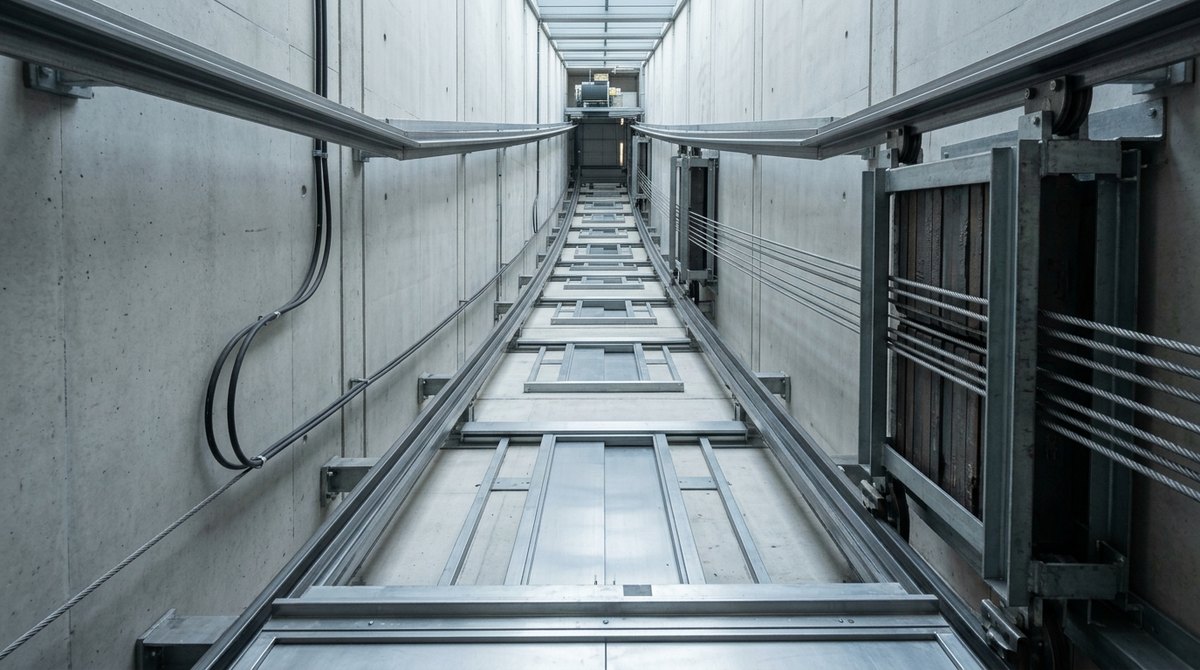
What is a lift condition assessment, and when do you need one?
What a lift condition assessment examines, how subsystem ratings are derived and why methods differ, and how the findings become a defensible capital plan — for facilities managers and owners.
Read article →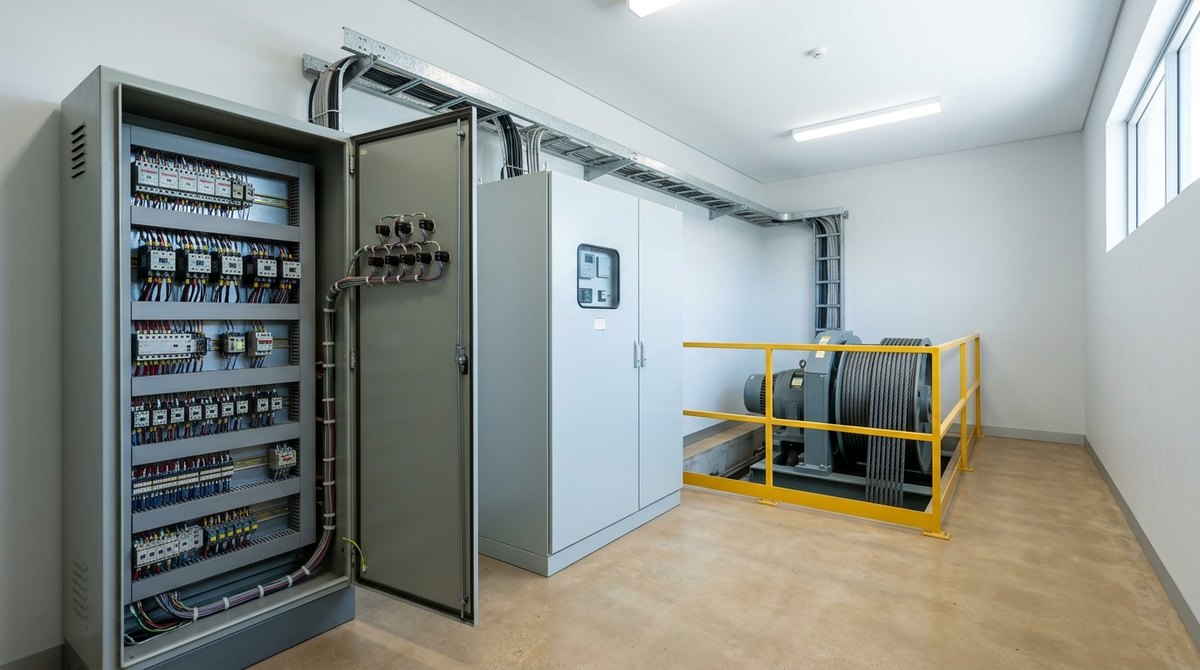
Lift modernisation vs replacement: how to decide
Modernisation renews selected subsystems; replacement renews the whole lift. The decision usually turns on obsolescence rather than wear. A framework across condition, obsolescence, disruption and capital — and how to place your own building on it.
Read article →
How much energy do lifts and escalators use?
Lift energy consumption explained: running versus standby energy, what each modernisation technology step actually saves, and how ISO 25745 turns it into an energy class and a payback period.
Read article →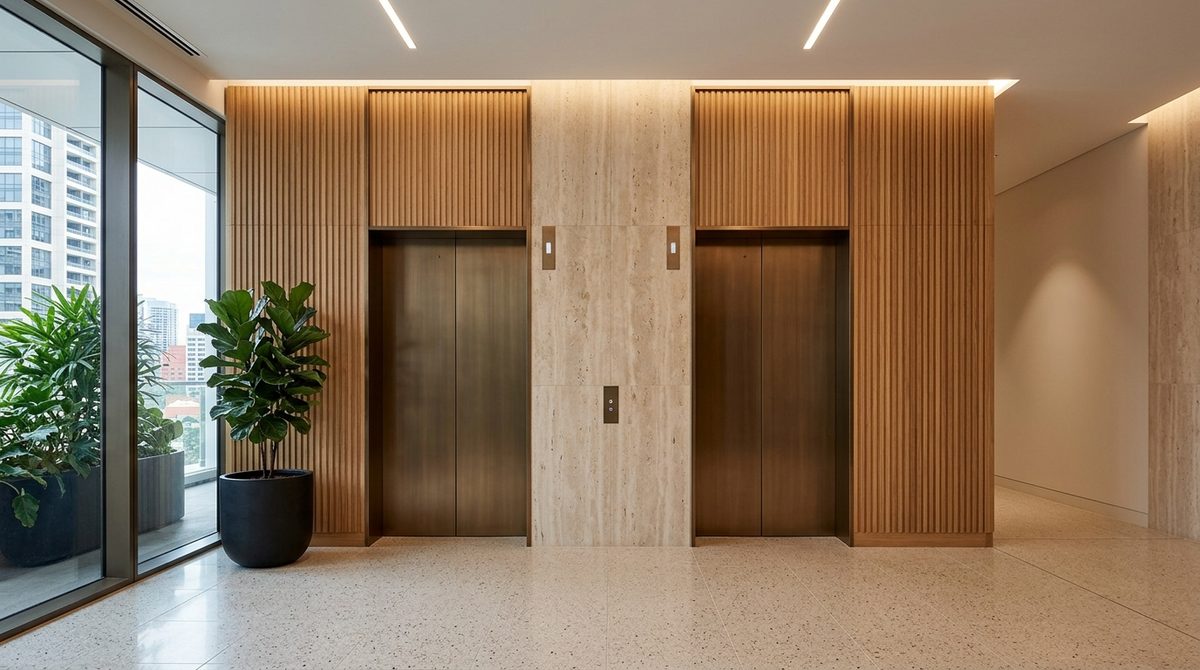
How to run a lift maintenance tender in Australia
Lift maintenance tenders in Australia — when to tender, what to prepare, how the process runs and the pitfalls to avoid, for building owners and managers.
Read article →
What is good lift availability? A benchmark guide
What lift availability means, what counts as good, and how to hold a contractor to it — a plain-language benchmark guide for building owners and asset managers.
Read article →
How many lifts does a building need?
Lift traffic analysis explained — waiting time, handling capacity and demand profiles, benchmarked against PCA, CIBSE Guide D and ISO 8100-32.
Read article →