
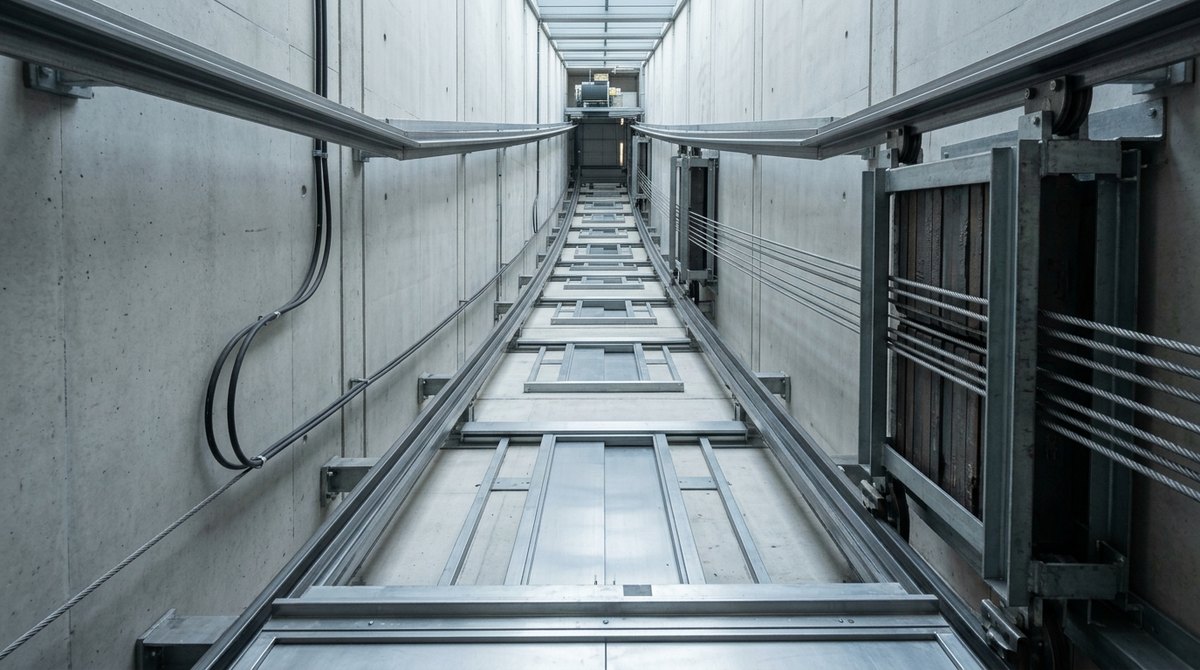
Every capital plan for a lift rests on somebody's opinion of its condition. A lift condition assessment settles whose opinion it is, and whether it survives contact with a finance committee.
A lift condition assessment is a structured inspection of a lift's mechanical, electrical and control subsystems, together with the maintenance, fault and compliance records behind them, carried out to establish the asset's present condition and how much serviceable life it has left. It produces a rated view of each subsystem, a register of defects and risks, and prioritised recommendations with indicative timing. Owners commission one when a decision needs an evidence base — an acquisition, a capital plan, a maintenance re-tender, or a modernisation call.
What does a lift condition assessment examine?
Two things, and the second is the one most often skipped: the equipment, and the paper trail behind it. On the equipment side, an assessment works subsystem by subsystem rather than forming one impression of the whole lift:
- Drive and machine — traction machine or hydraulic power unit, brake, mountings.
- Control system — controller and drive electronics, and critically whether they are still supported.
- Suspension and governor — ropes or belts, terminations, overspeed governor, safety gear.
- Car, doors and door operator — the door equipment works on every trip and shows it.
- Shaft equipment — guide rails and shoes, landing doors and locks, counterweight, buffers, travelling cables.
- Fixtures and signalisation — operating panels, indicators, emergency communications.
- Environment and infrastructure — machine room or machinery space, pit, power supply, ventilation, lighting, access.
On the documentary side, the assessor reviews what the equipment cannot show on the day: maintenance records and logbook, callout and breakdown history, prior defect reports and whether they were closed out, statutory inspection and registration records, drawings and manuals, and the parts-support position for the controller. A lift that presents well on a walk-through but carries a fault history of repeat callouts is telling two different stories. The records are the second one.
Compliance sits alongside both. Australian practice references the AS 1735 series for lifts, and the current safety rules for passenger and goods passenger lifts are an identical adoption of EN 81-20 — so equipment designed to EN 81-20 and equipment designed to the corresponding Australian part are the same requirements under two names. An assessment usually notes the gap between the code the lift was installed to and current expectations — not as a non-compliance finding, but because that gap shapes what an upgrade involves. Registration and inspection obligations vary by jurisdiction and should be confirmed with the relevant authority.
One distinction is worth drawing early:
| Exercise | Purpose | What it produces |
|---|---|---|
| Routine maintenance visit | Keep the equipment running to the contract's service standard | Service records, and defects raised by the party paid to maintain the asset |
| Statutory or periodic inspection | Confirm the installation meets the safety obligations applying to it — requirements vary by jurisdiction | A compliance outcome, not a lifecycle view |
| Lift condition assessment | Establish present condition and remaining serviceable life, subsystem by subsystem | Subsystem ratings, a defect and risk register, prioritised recommendations and timing |
A condition assessment is not a safety inspection and does not replace one; it answers a different question — not whether the lift is compliant today, but what the asset will need, and when.
How are condition scores derived?
Carefully — and not to any single universal standard. To be blunt: there is no one authoritative scoring scale for lift condition. Approaches differ in the subsystems weighted, the granularity of the ratings, and how a composite is assembled. Two competent assessors can rate the same lift differently and both be defensible.
The underlying principle is consistent, though. Each subsystem is rated on two axes — observed condition and remaining serviceable life — then weighted into an overall rating for the unit. Weighting matters because subsystems are not equal: a worn fixture is cosmetic, an unsupported controller is existential.
What informs a rating:
- Observed condition — wear, corrosion, contamination, alignment, damage, quality of past repairs.
- Age against typical service life for that subsystem — context, not a verdict.
- Obsolescence and parts support — whether spares and technical support remain available.
- Fault history — what breaks, how often, and whether repairs address root causes.
- Maintenance quality — evidence of the standard the asset has been held to.
- Compliance and technology gap to current expectations.
The rating exists to make units comparable: its value is in ranking a portfolio — this lift before that one — not in the precision of any individual figure. It is a structured summary of expert judgement, not a measurement. Interrogate it as one.
Obsolescence deserves particular attention, because it breaks the intuition that condition tracks wear. A lift can be mechanically sound and still be near the end of its practical life if the control system is unsupported and spares are scarce. Condition and remaining serviceable life are related, but not the same axis.
When do you need a lift condition assessment?
The trigger is almost always a decision that needs evidence behind it:
- Acquisition or due diligence — you are about to own a liability you did not specify. Find out what it is before settlement.
- A capital plan is being written or refreshed — the assessment is the input, not an afterthought.
- Availability is falling — recurring faults and slipping lift availability are symptoms. An assessment establishes whether the cause is the equipment, the maintenance, or both.
- A maintenance contract is being re-let — knowing what condition you are asking the market to take on is what makes tendered prices comparable.
- A modernisation decision is on the table — most often done backwards.
- A change of contractor — a baseline at handover records the condition you inherited.
How does an assessment feed a capital plan?
A condition assessment converts opinion into the evidence base for what gets funded, and when.
The sequence runs: subsystem ratings and remaining life, grouped into sensible interventions; interventions given indicative timing; timing prioritised across the portfolio against risk and consequence. Each line traces back to an observed finding and a stated rationale. When the plan is challenged — and capital plans are challenged — the answer is a document, not a recollection.
Which is why the assessment belongs before a modernisation decision, not after it. A recommendation to modernise, reached without a documented condition baseline, is a proposal in search of a justification. Worked the other way, the findings shape the scope: a unit sound in structure but obsolete in control points toward a different intervention than one degraded throughout. The assessment does not make the decision. It makes the decision defensible.
What to ask for when you commission one
- Independence from whoever would perform the resulting work.
- A stated method, applied consistently across everything you intend to compare — what each band means, what is weighted, how a composite is derived.
- Subsystem-level findings, not a headline figure per lift. The headline is for the board; the subsystems are what you act on.
- Records reviewed, not just a walk-through. Fault history is evidence a site visit cannot produce.
- Defects separated from lifecycle renewals — what needs attention now versus what belongs in a plan.
- Prioritised recommendations with indicative timing, ranked across the portfolio.
Short FAQ
Can our maintenance contractor do it? They have the access and the familiarity — and an interest in the outcome, particularly where the recommendation is work they would price. An assessor who would also sell the remedy carries a structural conflict. That does not make the assessment wrong, but the more capital riding on it, the stronger the case for independence.
How often should we reassess? Aligned to the capital planning cycle, and again after any material change — a modernisation, a change of contractor, a run of deteriorating performance. A condition baseline ages, and an old one quietly becomes an opinion again.
A lift condition assessment is the difference between believing your lifts need work and being able to show it — commissioned before the decision, and before you take a maintenance contract to market.
Related reading
More from the MAPLE Ascent Insights series.

PCA lift grading: what does the grade actually measure?
What the PCA quality grade assesses in a building's lifts, why there are separate matrices for new and existing buildings, which peaks the waiting-time target covers, and the four questions the grade deliberately does not answer.
Read article →
Destination control vs conventional dispatch: what changes for tenants
How destination control differs from conventional collective control, what tenants actually notice about the change, where each approach wins, and what to ask for at design stage — for developers and building managers.
Read article →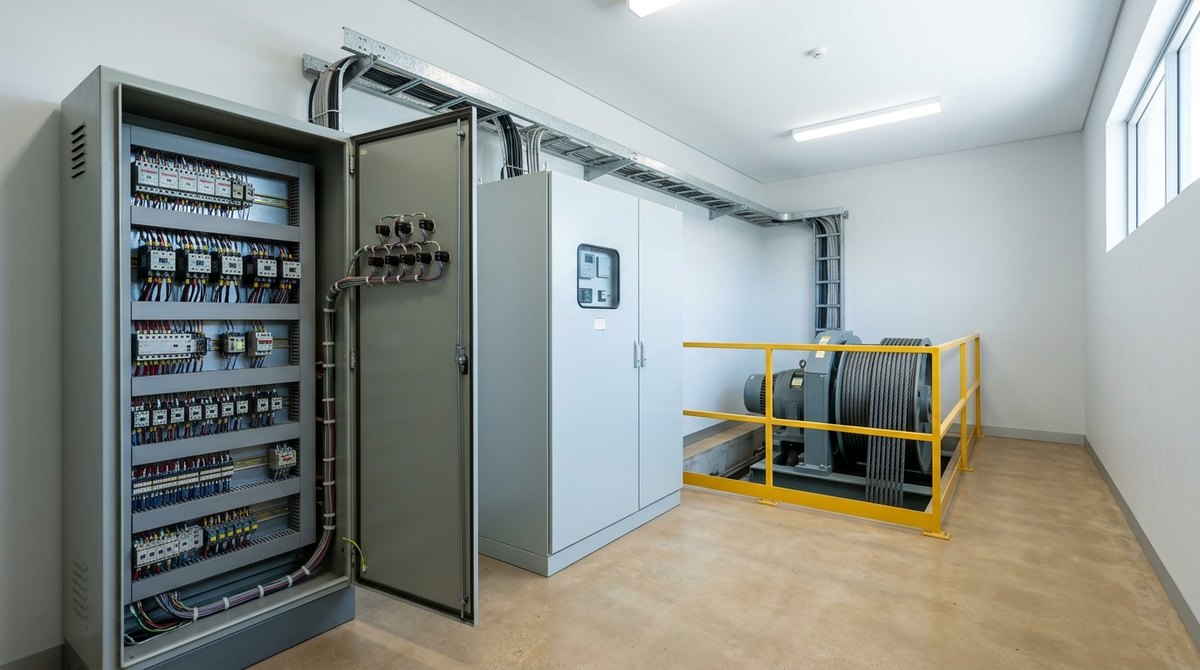
Lift modernisation vs replacement: how to decide
Modernisation renews selected subsystems; replacement renews the whole lift. The decision usually turns on obsolescence rather than wear. A framework across condition, obsolescence, disruption and capital — and how to place your own building on it.
Read article →
How much energy do lifts and escalators use?
Lift energy consumption explained: running versus standby energy, what each modernisation technology step actually saves, and how ISO 25745 turns it into an energy class and a payback period.
Read article →
What does a lift maintenance contract actually cover?
What a lift maintenance contract actually covers — comprehensive versus basic scope, the exclusions that generate the extras, and the clauses that quietly decide cost and risk. A guide for building owners and asset managers.
Read article →
How to run a lift maintenance tender in Australia
Lift maintenance tenders in Australia — when to tender, what to prepare, how the process runs and the pitfalls to avoid, for building owners and managers.
Read article →
What is good lift availability? A benchmark guide
What lift availability means, what counts as good, and how to hold a contractor to it — a plain-language benchmark guide for building owners and asset managers.
Read article →
How many lifts does a building need?
Lift traffic analysis explained — waiting time, handling capacity and demand profiles, benchmarked against PCA, CIBSE Guide D and ISO 8100-32.
Read article →